Category Archives: BOOKS

GETTING MORE FROM READING CHESS BOOKS

It's not enough to read a chess book, you also need to engage! I've previously recommended using any games presented as a 'guess the move' exercise, this week's Chess Questions Answered video explained another approach. Essentially you try to supplement any material presented with extra games, making you a kind of co-author. This should considerably enhance engagement and attention levels.

In the run up to getting the Grandmaster title in 1993, I did this with Mikhail Shereshevsky's Endgame Strategy. I looked for supplementary games for the different themes and noted them down at the end of every chapter. Wherever possible I would use my own games, though mainly they were examples from annotated games collections of great players.

What was the result? Well around this time my play improved a lot, and in particular my endgame play. This in turn had an effect on how I played the middle games, essentially I became more patient and was OK with exchanging pieces. Working on your endgame can produce great dividends, and I should add that Jonathan Hawkins, who tragically died this week, reported using such an approach in his book From Amateur to IM.

Training Tournaments

Sunday's training tournaments are in the Meran Variation (first of all 1.d4 Nf6 2.c4 e6 3.Nc3 d5 4.Nf3 c6 5.e3 Bd6), which is one of the recommended lines for Black in the Building an Opening Repertoire course. The second features the move 5...a6, which I think is an interesting and less explored options.

Sunday December 28th at 5pm UK Time: Meran with 5...Bd6

Sunday December 28th at 6.15pm UK Time: Meran with 5...a6
 

Video Discounts

This week's discount is 40% off Endgame Mastery using the code 'dec26jan3'. In this series of videos I show how you can improve your endgame play and use this stage of the game to notch up valuable points.

Last week's discount was 40% off Mastering Key Pawn Structures: ZOOM Formations, using the code 'dec19to27', and is still valid until tomorrow. This video series will consider ZOOM formations, which typically arise from the Gruenfeld Defence and Catalan Opening, and which were covered by Stefan Zeuthen and Bent Larsen in the classic book 'ZOOM 001: Zero Hour for Operative Opening Models'.

My Upcoming Events

I'll be playing in Nova Gorica, in Slovenia this coming month, one of my favourite tournaments in one of my favourite countries. I'm also hoping to play in the World Senior Team Championships in April, but would need to be invited!

January 23-30: Nova Gorica

A very nice and well organized event, details can be found here.

Have a good weekend.

Nigel
HOW MANY OPENINGS SHOULD YOU PLAY?

Something that players often wonder is how many openings they should play. Typically they wonder about a switch after a loss with their current choice, sometimes they just fancy something different.

Some very good advice on the matter was given in Alexander Kotov's Think Like a Grandmaster, which suggested knowing something about everything and everything about one thing. These days that is already quite a chore, so for amateur players I would suggest that this one thing is relatively low maintenance. I would also suggest that it's a sound choice, if you only have one opening you don't want it to become a liability and target for your opponents.

I went into more detail on this matter in this week's Chess Questions Answered videa now up on Tiger Chess. Yet these two guidelines of low maintenance yet high quality guided me in my recommendations of the French Defence and Queen's Gambit Declined as Black, plus a simple 1.d4 repertoire as White. From this solid basis it's healthy to experiment with other openings, especially in casual online games, to know something about everything. Yet the solid basis should be in place first.

Have I always followed my own advice? Sadly no, but partly because it's only now that I have achieved a good level of clarity. In the 1980s I was mainly playing the Modern Defence (1...g6 against everything) as Black, and this was not very good for my results. Had I played the French and Queen's Gambit Declined as my main options, and kept the Modern for just occasional outings, I feel I would have done much better.

Training Tournaments

This week's training tournaments are in the Advance Variation of the French, featuring the positions after 1.e4 e6 2.d4 d5 3.e5 c5 and 1.e4 e6 2.d4 d5 3.e5 c5 4.c3 Nc6 5.Nf3 Nge7. These lines feature in both the Building an Opening Repertoire course and French Defence, so this is an ideal opportunity to practice what you have learned:

Sunday August 3rd at 5pm UK Time: French Advance

Sunday August 3rd at 6.15pm UK Time: French Advance with 5...Nge7
 

Video Discounts

This week's discount is 40% off buying my Endgame Mastery series, using the code 'aug1to9'. This four hour series explains how to master this stage of the game, explaining the principles and properties of endgames and showing you how to go about mastering this stage of the game.

Last week's discount is still valid until tomorrow, you get 40% off the purchase of Tiger Chess Strategy Course, part 1 by using the code 'july25august2'. This four part course is designed to provide a thorough education in positional chess. Different aspects of chess strategy are broken down and explained, helping you understand a broad range of concepts that will provide a whole new dimension to your play.

My Upcoming Events

There's still nothing new from last week and I have a new project that I'll be working on from September. I will keep playing, but it will move down my list of priorities for a while.

Here is how things look now, with the British Championship starting tomorrow:

August 2 - 10 2025: British Championships
As mentioned I've gone for the Championship itself rather than one of the old folks sections. Obviously this will be full of underrated juniors, I'll just have to play better against them this time! You can find details here.

August 23 - 30 2025: San Cristóbal de La Laguna, Tenerife
This looks like a great event and I'm really looking forward to it. Travelling back is a bit tricky because the direct flights were very expensive, finally I found a flight back to Glasgow from where I can take a train!

September 5-7: Hull 4NCL Congress
I'm a big fan of 4NCL Congresses because they are played in nice venues, they're invariably well organized and they offer free entry and accommodation to GMs. You can find details here.

Have a good weekend.

Nigel

STUDYING THE GAMES OF GREAT PLAYERS

One of the things I did a lot as a teenager was to study the games of great players. I have literally dozens of biographical games collections and have been through the vast majority of them. I did not have the opportunity for formal chess lessons but these books provided a unique and valuable alternative.

How did I go through them? It wasn't just a case of playing through the moves, I would cover up the winners moves with a piece of paper and try to guess what he did. Sometimes I would stop at a particular position and use it as an analysis exercise, as explained in Think Like a Grandmaster by Alexander Kotov. To this day I think this is a great approach to learning and training.

Which players did I choose? Paul Keres was my favourite, also Mikhail Botvinnik, Bent Larsen, Leonid Stein, Tigran Petrosian, Mikhail Tal, Efim Geller, Boris Spassky, Jose Raul Capablanca, Alexander Alekhine and many others. Sometimes I went through tournament books, for example Emanual Lasker's book on St. Petersburg 1909 is one that I went through from cover to cover. Sometimes books on chess strategy were also good for this purpose.

Are there technology based ways of doing something similar? Not really, sitting down with a book and chess set has some unique attributes which can't be emulated on a computer screen. Computers and other technology might seem convenient, but they also fall short in certain respects.

Training Tournaments

This week's training tournaments are in the French Defence (1.e4 e6 2.d4 d5), both the Advance (3.e5) and the Exchange Variation (3.exd5). These lines were covered in two of my video series, Building an Opening Repertoire and French Defence:

Sunday June 29th at 5pm UK Time: French Advance
Sunday June 29th at 6.15pm UK Time: French Exchange 

My Upcoming Events

There's nothing new from last week and I have a new project that I'll start work on from September. I will keep playing, but it will move down my list of priorities for a while Here is how things look now:

July 31 - August 10 2025: British Championships
As mentioned I've gone for the Championship itself rather than one of the old folks sections. Obviously this will be full of underrated juniors, I'll just have to play better against them this time! You can find details here.

August 23 - 30 2025: San Cristóbal de La Laguna, Tenerife
This looks like a great event and I'm really looking forward to it. Travelling back is a bit tricky because the direct flights were very expensive, finally I found a flight back to Glasgow from where I can take a train!

September 5-7: Hull 4NCL Congress
I'm a big fan of 4NCL Congresses because they are played in nice venues, they're invariably well organized and they offer free entry and accommodation to GMs. You can find details here:

I'll be looking for things after September, not sure when or where!
 

Twitch Channel

My Twitch channel has new content every Monday ('Chess Questions Answered), the Webinar on training tournaments and games is up on Fridays. Please follow it if you'd like to get updates etc, all the shows will be available to Premium members in the Tiger Chess members area, even when they are no longer available on Twitch.

Have a good weekend.

Nigel

HOLIDAY PREPARATION

Finding the time to study chess can be quite tricky, especially for those of us with work and family commitments. It can seem almost impossible to find a solid chunk of time to work on your game which usually means using occasional study opportunities during the day. I built Tiger Chess with this in mind; people can access lessons and videos while waiting for a bus or train or during lunch breaks at the office. It is better to try and set aside some study time during the day, for example first thing in the morning or last thing in the evening, but this is not always possible.

When holidays come along, such as the ones many of us have at the moment, there can be more of an opportunity to spend a few consecutive hours on chess. How should we use it productively? The first thing is to have a realistic plan in place of what can be achieved during this time. There is also a good case for having a plan for all of our chess study, holidays just providing a bit more time to make extra progress.

A favourite study topic is the opening, not least because most of the chess books out there are about them. Simple practical openings that are not in danger of being suddenly refuted make the most sense for busy people. This accounts for many of the lines I recommend, such as the French Defence, Queen's Gambit Declined and Queen's Pawn Games as White. Those with little time on their hands do not have time to try to assimilate opening theory using books with hundreds of pages of densely packed analysis. This stuff is also completely unnecessary, games can be won against Grandmasters using simple openings and strong core skills.

What is the best way to study openings? Well here at Tiger Chess HQ my son Sam and I use the old fashioned approach of going through complete games with a board and pieces, never once going through them on a computer screen. We also play dozens of training games in each line in order to get the feel of the middle games and build up practical experience in particular position types. I think this is invaluable but very few people do it.

One final recommendation is to try to introduce new openings over time rather than change everything in one fell swoop. The previous paragraph really explains this, if you try to take on too much it will be impossible to do it thoroughly enough. The result will be a superficial grasp of a lot of things rather than a deep grasp of just one.

Nigel Davies

BUILDING AN OPENING REPERTOIRE

Building a chess opening repertoire is a fundamental aspect of becoming a strong player. It also takes time to do so and there are top Grandmasters who spend many hours every day just on this. Besides understanding the plans and ideas they will need to know about the latest finesses, which sometimes occur 20-25 moves or more into the game. There is also the issue of computer testing, which with the sharpest openings will be a big job requiring some very serious technology.

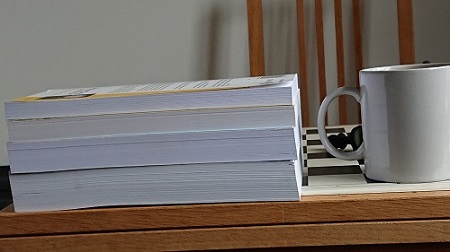
The fact that top players want to do this leads amateurs to think that they need to as well, yet how is this possible with things like a job and family to consider? The short answer is that it is not, they need to make simpler choices whilst using their time to develop core skills such as positional understanding and a knowledge of endgames. Yet this is not what chess publishers seem to indicate as they churn out countless volumes of densely packed analysis. Here's a picture of four books which cover what might seem to be a simple repertoire; 1.d4 as White and then the Caro-Kann and Slav with Black. The thing to the right is my coffee cup:

Four Book Repertoire

A count of the number of pages shows a total of around 1,750 pages, many of the variations extend to 20 moves or more and there are probably around 10 variations a page. Is it practical for anyone with any kind of life outside of chess to study these monstrosities? The answer is a clear NO! So why do people buy them? Perhaps they are tired of bad positions and have heard somewhere that they should play the main lines as a remedy?

Is playing main lines a remedy? Well kind of, though this should not necessitate having 1,750 pages/17,500 variations worth of repertoire. If someone learns and understands logical openings, where there is no immediate sharp conflict, then nothing too bad will happen to them in the opening. I should add that if their general chess understanding is good then they will probably get the better of an opponent who has booked up on variations but does not understand too much. Trust me, they will not be able to remember all 17,500 variations and are more likely to get brain damage than chess strength.

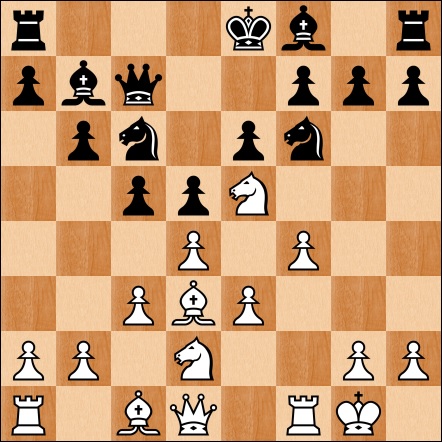
So where can someone find repertoires which depend largely on plans and ideas? Unfortunately they are difficult to find, and this is why I decided to create one. A few years ago I developed the Building an Opening Repertoire course here, which features 21.5 hours of video and pgn files which can be loaded into software such as Chess Position Trainer and Chessable. I deliberately made the lines as simple and logical as possible so as to aid the assimilation of plans and ideas, for example as Black I gave the French (including the Rubinstein Varation with 3...dxe4) and older lines of the Queen's Gambit Declined. For White I gave the Colle System (1.d4 followed by 2.Nf3 and 3.e3) and showed how White could then adapt his later plans to however Black responded, sometimes going for a queenside pawn advance (c2-c4, b2-b4 and a2-a4) and at others setting up a Stonewall Formation (Nf3-e5 and f2-f4). People who have bought this course have responded very positively, many starting to understand typical plans for the first time despite having shelves full of openings books. Below is a position from one of the lines in which White has established a knight on e5:

Stonewall Attack Formation

The main target audience for the Building an Opening Repertoire course is the 1300 to 2000 Elo range, though even stronger players have found it useful. I am now working on some follow up courses, the first of which will be an expanded version of the French and include lines against both 3.Nd2 and 3.Nc3 as alternatives to the Rubinstein (3...dxe4 against both). I will be announcing it here when it is out, though you will get the news faster by signing up for the Tiger Chess Newsletter.

Nigel Davies