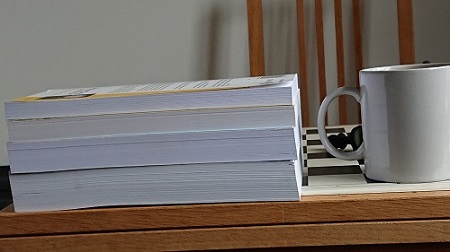
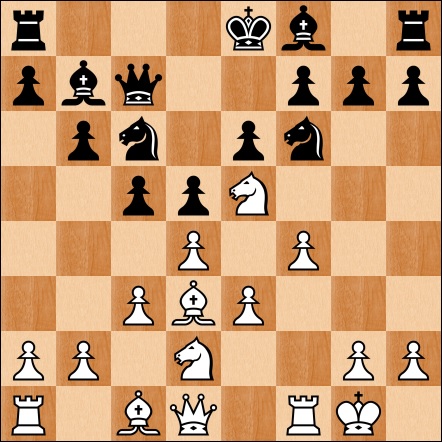
There are a lot of chess books published and not all of them are very useful. Yet I've found a few of them to be interesting and one in particular that I keep dipping into. This is Aleksandr Rakhmanov's Secrets of Opening Preparation published by Thinker's Publishing in 2021.
Rakhmanov is a very strong GM, but one who gets by with relatively little theoretical knowledge. He tries a variety of things with White including 1.d4, and Flank Openings if there's something he prefers to avoid. With Black his front line defences are the Petroff (1.e4 e5 2.Nf3 Nf6) and Janowsky Variation of the Queen's Gambit Declined (1.d4 d5 2.c4 e6 3.Nc3 a6), both of which he knows very well. Against lower rated opponents he tries some less classical openings including the Nimzowitsch-Rubinstein Sicilian (1.e4 c5 2.Nf3 Nf6) and the Old Indian Defence (1.d4 Nf6 2.c4 d6 3.Nc3 e5).
Rakhmanov explains his approach very clearly and honestly, and although his lines are slighly unusual he prepares them very deeply with strong engines. In many ways it seems quite risky to show so much and in such detail, but his methods could just as easily be applied to other lines. I'd say this book is of most value to players over 2200 who want to further develop their approach to openings, but most chess enthusiasts should find it interesting.
Vimeo Closing Its Video On Demand
Unfortunately Vimeo is closing its Video On Demand service in November, so I'll no longer be offering any titles through them. Those who have purchased one of my videos on this platform will be able get access to the materials at Tiger Chess by sending me their receipts, these are available here when you are logged onto your Vimeo account.
Sam's Youtube Chanel
My son Sam runs a Youtube channel in which he streams his live games on chess.com. This shows considerably more bravery than I'm able to muster, so please check it out and subscribe. I think he's doing a nice job.
Upcoming Events
This is how things look right now having withdrawn my availability for the European Senior Team Championships. I might get invited to the English Senior Championships in October, in which case I will probably play:
August 21-23: Manchester Summer Congress, Bolton UK
This is a long standing event which is now run in a nice venue and with good prizes. Details can be found here.
September 25-27: Hull 4NCL
The 4NCL Congresses are always well run, so I'll be playing in this one. Details can be found here.
October 23-25: Scarborough Congress
I've now entered this one and booked my hotel. Details can be found here.
November 2-13: European Youth Championships, Crete
I've been appointed as one of the coaches for this event, which basically rules out the English Senior Championships because the two events only have a day's break between them.
Tiger Chess Themed Training Tournaments are organized on a weekly basis at Lichess, featuring selected opening variations. You can check out what's coming up here.
Have a good weekend.
Nigel