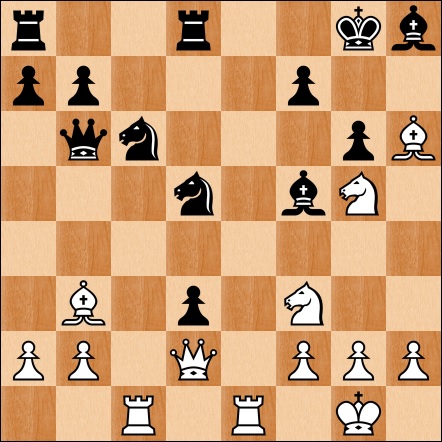
Building a chess opening repertoire is a fundamental aspect of becoming a strong player. It also takes time to do so and there are top Grandmasters who spend many hours every day just on this. Besides understanding the plans and ideas they will need to know about the latest finesses, which sometimes occur 20-25 moves or more into the game. There is also the issue of computer testing, which with the sharpest openings will be a big job requiring some very serious technology.
The fact that top players want to do this leads amateurs to think that they need to as well, yet how is this possible with things like a job and family to consider? The short answer is that it is not, they need to make simpler choices whilst using their time to develop core skills such as positional understanding and a knowledge of endgames. Yet this is not what chess publishers seem to indicate as they churn out countless volumes of densely packed analysis. Here's a picture of four books which cover what might seem to be a simple repertoire; 1.d4 as White and then the Caro-Kann and Slav with Black. The thing to the right is my coffee cup:
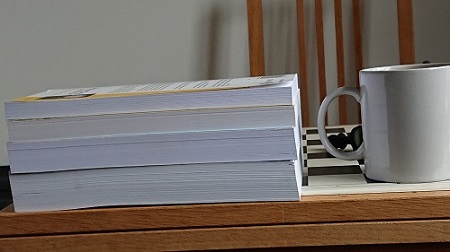
A count of the number of pages shows a total of around 1,750 pages, many of the variations extend to 20 moves or more and there are probably around 10 variations a page. Is it practical for anyone with any kind of life outside of chess to study these monstrosities? The answer is a clear NO! So why do people buy them? Perhaps they are tired of bad positions and have heard somewhere that they should play the main lines as a remedy?
Is playing main lines a remedy? Well kind of, though this should not necessitate having 1,750 pages/17,500 variations worth of repertoire. If someone learns and understands logical openings, where there is no immediate sharp conflict, then nothing too bad will happen to them in the opening. I should add that if their general chess understanding is good then they will probably get the better of an opponent who has booked up on variations but does not understand too much. Trust me, they will not be able to remember all 17,500 variations and are more likely to get brain damage than chess strength.
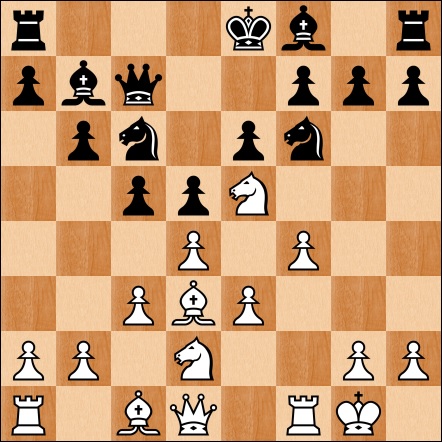
So where can someone find repertoires which depend largely on plans and ideas? Unfortunately they are difficult to find, and this is why I decided to create one. A few years ago I developed the Building an Opening Repertoire course here, which features 21.5 hours of video and pgn files which can be loaded into software such as Chess Position Trainer and Chessable. I deliberately made the lines as simple and logical as possible so as to aid the assimilation of plans and ideas, for example as Black I gave the French (including the Rubinstein Varation with 3...dxe4) and older lines of the Queen's Gambit Declined. For White I gave the Colle System (1.d4 followed by 2.Nf3 and 3.e3) and showed how White could then adapt his later plans to however Black responded, sometimes going for a queenside pawn advance (c2-c4, b2-b4 and a2-a4) and at others setting up a Stonewall Formation (Nf3-e5 and f2-f4). People who have bought this course have responded very positively, many starting to understand typical plans for the first time despite having shelves full of openings books. Below is a position from one of the lines in which White has established a knight on e5:
The main target audience for the Building an Opening Repertoire course is the 1300 to 2000 Elo range, though even stronger players have found it useful. I am now working on some follow up courses, the first of which will be an expanded version of the French and include lines against both 3.Nd2 and 3.Nc3 as alternatives to the Rubinstein (3...dxe4 against both). I will be announcing it here when it is out, though you will get the news faster by signing up for the Tiger Chess Newsletter.
Nigel Davies