Category Archives: PATTERN RECOGNITION

A SEPARATE REPERTOIRE FOR BLITZ?

This week's Chess Questions Answered I looked at whether or not someone should have a separate repertoire for blitz and rapidplay games. I think it depends on whether you use blitz for training purposes, as I do, or enter online events in the hope of winning money. If you're playing for training purposes then you should use the same openings you intend to play in standard games, and by doing so get some invaluable experience. If you're trying to win money the dynamics are quite different, and in this case it can make sense to have a separate repertoire.

A few years back I spoke to the young Italian GM Luca Moroni who told me that he reserved the Modern Defence (1...g6 against anything) for his online games. I checked them out and found that he had some interesting and noteworthy ideas, coming close to beating Magnus Carlsen with Black in one Titled Tuesday encounter. The Modern Defence is just one example of a blitz repertoire for Black, in fact you can play all sorts of stuff that has a slightly shady reputation.

What's the problem with playing your standard time limit repertoire in blitz? Essentially you are giving your opponents valuable information which they might be able to capitalize on with sufficient time to prepare. This is not a problem if you play under a pseudonym, but many titled players do not have this opportunity if they want to enter events such as the Titled Tuesday tournaments. In this case it makes perfect sense to have a separate repertoire, though even here there's a case for using such tournaments as additional training and reinforcement.

Video Discounts

This week's discount is 40% off buying Mastering Key Pawn Structures: Blocked Positions using the code 'june5to13'. Mastering key pawn structures is the most effective way to learn positional play. This video series will consider positions in which the centre is blocked and play is generally conducted on the flanks.

Last week's discount was 40% off my series on Crafting Your Own Opening Repertoire using the code 'may29june6', and this is still valid until tomorrow. Developing an opening repertoire is a key aspect of any player's development, and the most effective way to do this is to craft your own. This video series demonstrates how to go about this, covering opening selection, choosing sources and assembling your lines.

Sam's Youtube Chanel

My son Sam has started a Youtube channel in which he streams his live games on chess.com. This shows considerably more bravery than I'm able to muster, so please check it out and give him a like, I think he's doing a nice job.

Upcoming Events

This is how things look right now having withdrawn my availability for the European Senior Team Championships. I might get invited to the English Senior Championships in October, in which case I will probably play:

July 7-12: South Wales International, Bridgend, Wales
I've accepted an invitation to this event and look forward to playing! 

August 1-9: British Championships, Coventry, UK
I've accepted an invitation to this one (the Championship itself) and look forward to playing.

September 25-27: Hull 4NCL
The 4NCL Congresses are always well run, so I'll be playing in this one. Details can be found here.

October 23-25: Scarborough Congress
I'm intending to play in this one if I can. Details are here.

October 26-31: English Senior Championships, Peterborough
This is also up in the air unless and until I get invited. Details can be found here

Tiger Chess Themed Training Tournaments are organized on a weekly basis at Lichess, featuring selected opening variations. You can check out what's coming up here.

Have a good weekend.

Nigel
DO THE BEST MOVES MAKE SENSE?

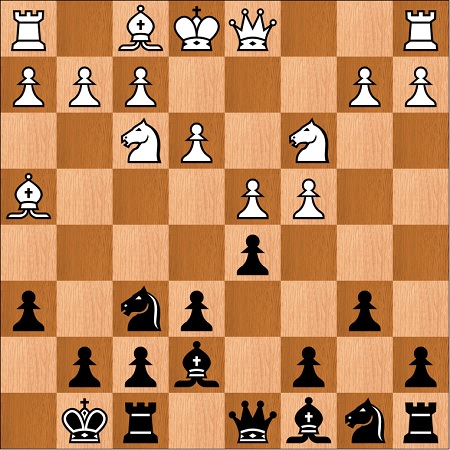
Something that I realized quite recently is that there are many positions in which the best engine move makes no sense whatsoever, at least not to me. They're based on pure calculation, and what they calculate just happens to work. With other positions I can understand why the engine suggests what it does, there's a certain logic to what it's doing. Does this anomaly fit a particular pattern? I think that it does. In main lines, which feature lots of standard plans and ideas, the engine moves make sense to me. It's in non-standard positions where I'm often completely baffled.

This accords with Adrian De Groot's discovery that strong chess players excel in pattern recognition whilst we know that engines excel in brute force calculation. In turn that means that experienced players might be better off sticking to standard openings whereas great calculators might want to mix things up. It might be less clearcut if an experienced player is also a good calculator, and in this case the require position may also depend on the relative strengths of the opponent.

What can we learn from this from improvement purposes? It goes without saying that it's a good idea to improve your calculation skills, but there's often an upper limit about how far we can go with this. On the other hand the sky's the limit with mastering typical positions, the main limitation being the amount of time you're willing to devote to it.

Video Discounts

This week's discount is 40% off Mastering Key Pawn Structures: Carlsbad Formations using the code 'may15to23'. This video series will consider the Carlsbad formation, an ideal structure for learning planning and positional play.

Last week's discount was 40% off buying Learning from the Greats: Anatoly Karpov using the code 'may8to16', and this is still valid until tomorrow. Anatoly Karpov is widely acknowledged as having been one of the greatest players in history. In this series of videos Nigel examines Karpov's style and strengths, showing what can be learned from him.

Upcoming Events

This is how things look right now having withdrawn my availability for the European Senior Team Championships. I might get invited to the English Senior Championships in October, in which case I will play:

May 24: Warrington Rapidplay
This one is local and I need the practice. Details can be found here.

July 7-12: South Wales International, Bridgend, Wales
I've accepted an invitation to this event and look forward to playing! 

August 1-9: British Championships, Coventry, UK
I've accepted an invitation to this one (the Championship itself) and look forward to playing.

September 25-27: Hull 4NCL
The 4NCL Congresses are always well run, so I'll be playing in this one. Details can be found here.

October 23-25: Scarborough Congress
I'm intending to play in this one if I can. Details are here.

October 26-31: English Senior Championships, Peterborough
This is also up in the air unless and until I get invited. Details can be found here

Tiger Chess Themed Training Tournaments are organized on a weekly basis at Lichess, featuring selected opening variations. You can check out what's coming up here.

Have a good weekend.

Nigel
 

THE PROS AND CONS OF FLEXIBLE OPENINGS

In the recent World Senior Championships in Durres, Albania, I only got to play 5 games with 2 wins and three draws. In one sense this was disappointing but in another I had plenty of time to reflect on my chess and how to improve. I've made no secret of the fact that I've struggled to contend with modern computer based preparation, which is not a particular issue at club chess but is a serious problem when you face well prepared juniors. I have now concluded that the right answer is to play flexible openings.

What is meant by the term 'flexible'? As I discuss in this week's Chess Questions Answered video, I think there are two distinct meanings plus area of overlap. Flexibility can refer to a pawn structure which has yet to be defined and whilst other players use it to describe multiple options within a particular opening. Quite often these two things come together, a flexible pawn structure offering lots of ways to proceed and very few forcing lines.

Should club players use this approach? Actually I think that only part of it is suitable, they are better off using fixed pawn structures because the plans are more clearly defined. On the other hand it's useful to have various options and a lack of forced lines because that will encourage developing general skills rather than just memorizing computer moves. Openings which fit this bill feature heavily amongst my recommendations, for example lines like the Queen's Gambit Declined and French Defence as Black.

Video Discounts

This week's discount is 40% off buying the Black Queen's Gambit Declined Repertoire using the code 'may1to9'. This is an advanced, stand-alone opening course based around the Tartakower Variaton (1.d4 Nf6 2.c4 e6 3.Nc3 d5 4.Bg5 Be7 5.Nf3 h6 6.Bh4 0-0 7.e3 b6) and the Semi-Tarrasch Defence (1.d4 Nf6 2.c4 e6 3.Nc3 d5 4.cxd5 Nxd5 5.e4 Nxc3 6.bxc3 c5 or 1.d4 Nf6 2.c4 e6 3.Nc3 d5 4.Nf3 c5). It features 14 hours of video which explain key games and has a pgn (portable game notation) file of recommended variations that can be built upon, extended and memorized. 

Last week's discount was 40% off buying Creating an Improvement Plan using the code 'april24may2', and this is still valid until tomorrow. In this series of videos I draw on my coaching experience to show how players can diagnose their strengths and weaknesses, then target the most important areas to make the most effective use of their efforts.

Upcoming Events

This is how things look right now, with the World Senior Team Championships behind me. I've said I'm available for the European Senior Team Championships (August 26 to September 5) but don't know if I'll be selected for any of the teams.

July 7-12: South Wales International, Bridgend, Wales

I've accepted an invitation to this event and look forward to playing! 

August 1-9: British Championships, Coventry, UK

I've accepted an invitation to this one (the Championship itself) and look forward to playing.

Have a good weekend.

Nigel

THE BEST OPENINGS FOR LEARNING STRATEGY

One of the main revelations in my approach to chess training was that choosing particular openings can help a lot. Studying different pawn structures is one thing, actually playing them is a way to learn actively, with heightened attention levels during the games in which they are employed. Another factor is that they should have relatively low maintenance, by which I mean that they shouldn't overburden a player's memory or require constant study to keep up to date. The main reason for this is that there are lots of aspects of chess that need to be studied, and openings are only one small part of this.

What are some good examples of such openings? Against 1.e4 I have tended to recommend the French Defence, and in particular the lines with ...dxe4 such as the Rubinstein (1.e4 e6 2.d4 d5 3.Nc3 dxe4 4.Nxe4 Nd7). This creates a pawn structure known as the little centre, which together with the Exchange Variation (3.exd5) and Advance Variation (3.e5) provides three important position types that players can learn from. Similarly there is the Caro-Kann (1.e4 c6) which can lead to a little centre (2.d4 d5 3.Nd2 dxe4 4.Nxe4), a blocked centre (2.d4 d5 3.e5), a Carlsbad formation (2.d4 d5 3.exd5 cxd5 4.Bd3) or an isolated d-pawn (2.d4 d5 3.exd5 cxd5 4.c4). These are all excellent positions to learn from and I discuss the Caro in this week's Chess Questions Answered video.

There a similarly good choices against 1.d4, such as the Queen's Gambit Declined (1.d4 d5 2.c4 e6) and Nimzo-Indian (1.d4 Nf6 2.c4 e6 3.Nc3 Bb4) whilst with White I've long felt that 1.d4 is the simplest approach to creating an opening repertoire with a good range of typical positions. Such openings form the backbone of the repertoires I suggest and can help take your positional play to the next level.

Training Tournaments

Here are the latest scheduled events:

Sunday April 19th, 5pm UK Catalan

Sunday April 19th, 6.15pm UK French Rubinstein

Sunday April 26th, 5pm UK Colle Dutch Stonewall

Sunday April 26th, 6.15pm UK French Fort Knox

Video Discounts

This week's discount is 40% off the purchase of the White 1.d4 Repertoire using the code 'apr17to25'. This is a stand-alone opening course in which White is still playing 1.d4 followed by 2.Nf3 but will then follow up with 3.c4 against most of Black's defences. A particularly important aspect of this course for the developing player is the inclusion of openings which act as touchstones for the understanding of positional play, including the Queen's Gambit Declined Exchange Variation (1.d4 d5 2.Nf3 Nf6 3.c4 e6 4.cxd5 exd5) and King's Indian Petrosian System (1.d4 Nf6 2.Nf3 g6 3.c4 Bg7 4.Nc3 0-0 5.e4 d6 6.Be2 e5 7.d5). These openings are particularly rich in plans and pawn levers, which helps students develop a deeper positional understanding.

Last week's offer was 40% off buying Crafting Your Own Opening Repertoire using the code 'apr10to18'. Developing an opening repertoire is a key aspect of any player's development, and the most effective way to do this is to craft your own. This video series demonstrates how to go about this, covering opening selection, choosing sources and assembling your lines.


Upcoming Events

This is how things look right now, with the World Senior Team Championships starting on Sunday. I'm hoping to get invites to the British Championships (August), European Senior Team Championships (late August) and English Senior Championships (October), but there's nothing definite as yet.

April 18 - 29: World Senior Team Championships, Durres, Albania
I've had confirmation that I'll be in the 50+ first team for this one.

July 7-12: South Wales International, Bridgend, Wales

I've been invited to this event and will be accepting. 

Have a good weekend.

Nigel

BORROWING GRANDMASTER OPENING RESEARCH

In this week's Chess Questions Answered video, I explained how we can borrow ideas from great players by paying close attention to their games. They'll often devote a lot of time and energy to solving particular opening problems, so it's well worth seeing what they play in positions which might have given us cause for concern. A related approach is to copy the opening repertoire of a player whose style we like, watching for any new games that they play.

I've never been someone who has played topical and critical lines, but I have borrowed ideas from players I've admired. I have used many Paul Keres ideas, particular as Black in the Ruy Lopez. In many cases it has been lesser known players who played something that appealed to me, and the advantage there is that it might not be as fashionable.

One opening that I've played quite a lot is the Torre Attack, but only after 1.d4 Nf6 2.Nf3 g6 and now 3.Bg5. Keres played this and Smyslov too. It probably doesn't give White anything if Black plays well, but the same is true of many sharp main lines. In my Torre studies I will look for other players who specialize in it and take careful note of the lines they play.

A good place to start with this approach is to find a player whose games you like. Can you also play some of their openings? If you can then give it a go!

Training Tournaments

Richard is doing a great job of running these, introducing a slightly longer time limit and starting some of them from the initial position or just a single first move. Here are the ones that are currently scheduled:

Sunday February 1st, 5pm UK Time Colle System

Sunday February 1st, 6.15pm UK Time: Torre Attack

Video Discounts

This week's discount is 40% off Mastering Key Pawn Structures: ZOOM Formations using the code 'jan30feb7'. This video series will consider ZOOM formations, which typically arise from the Gruenfeld Defence and Catalan Opening, and which were covered by Stefan Zeuthen and Bent Larsen in the classic book 'ZOOM 001: Zero Hour for Operative Opening Models'.

Last week's discount is 40% off Learning from the Greats: Mikhail Botvinnik using the code 'jan23to31'. Botvinnik was a great master of the endgame and introduced a number of new methods including deep research into different opening systems. These insights would later to transmitted to one of his students, the formidable Garry Kasparov.

Upcoming Events

The final round of the HIT Open in Nova Gorica took place today, so I'm coming home tomorrow. I've signed up for a 4NCL Congress over Easter, and now understand that I'll be playing for the England 50+ first team in the World Senior Team Championships in April. I might look for another weekend event in February or March.

April 3 - 6: 4NCL Easter Congress, Daventry

I try to make most of the 4NCL Congresses because I like them so much. This one is 7 rounds, and played over Easter weekend.

April 18 - 29: World Senior Team Championships, Durres, Albania
I've had confirmation that I'll be in the 50+ first team for this one.

Have a good weekend.

Nigel

HOW TO MOVE ON FROM PET OPENINGS

In this week's Chess Questions Answered video I answered a question about giving up pet openings. Replacing former favourites with better lines can be an important part of a player's development, for example my chess improved considerably when I no longer played the Modern Defence (1...g6 against everything) exclusively. I switched instead to more solid options, including the Nimzo-Indian and meeting 1.e4 with 1...e5.

What's the right time to do this? There can be various indicators, for example your results with your pet opening may have become worse, or you no longer feel you enjoy playing it (often these things will go together). Such times suggest a rethink, perhaps extending to your whole game. Alexander Kotov recommended doing this once in a while in his famous book, Think Like a Grandmaster. I've made a practice of this myself, and now tend to make minor adjustments as new information comes in.

What openings should you switch to? It makes sense not to change too much too quickly, and it might be best to go for positions in which you have some experience and understanding. I cover this topic in my video series, Crafting Your Own Opening Repertoire, which is discounted this week.

Training Tournaments

This week's training tournaments are in unusual lines of the French Defence, namely 2.b3 and 2.Nf3 d5 3.e5. These are covered in my Building an Opening Repertoire course as well as The French Defence.

Sunday October 5th at 5pm UK Time: French 2.b3

Sunday October 5th at 6.15pm UK Time: French 2.Nf3 d5 3.e5
 

Video Discounts

This week's discount is 40% off buying the Crafting Your Own Opening Repertoire series, using the code 'oct3to11. In the four parts I include coverage of opening selection, choosing sources and assembling your lines. 

Last week's discount was 40% off buying Mastering Key Pawn: The Classical Centre, using the code 'sep26tooct4' and is valid until tomorrow. This video series considers the classical centre, which can arise from a very large variety of chess openings including the Semi-Tarrasch and Gruenfeld Defences, plus many others..

My Upcoming Events

After Tenerife cancellation, I've accepted an invitation to the Scarborough congress, largely because my wife enjoyed going there last year. This is the only thing I have planeed right now, though I might also play in the Bolton Rapidplay in December.

October 24-26: Scarborough Congress
I played in this last year and it's a popular event. Details can be found here.

Have a good weekend.

Nigel

SEEKING STRONG OPPOSITION

One important aspect of chess improvement is in the strength of the opposition you play against. Strong opposition will stimulate the desire to do things better, if you don't you're going to get beaten. On the other hand looking to play weaker opponents, in order to get minor glory, will lead to a gradually deterioration of you game.

Because of this, my feelings about playing in senior chess events have been rather mixed. On the one hand it's nice to meet up with old acquaintances, on the other there's an element of avoidance to it, steering clear of strong young players, who are using modern learning methods and are often underrated. It may seem more comfortable, but at the same time it avoids the kind of challenge that leads to growth.

The desire to play strong opposition is one of the reasons I've chosen to play in the British Championship itself, rather than the 50+ or 65+ sections; there's just one game a day so tiredness shouldn't be a factor. I've also accepted an invitation to a strong open tournament in Izmir in Turkey, and have already started preparing. 

Training Tournaments

This week's training tournaments are in the Queen's Gambit Declined Exchange Variation, which I believe is a very useful structure for learning positional play due to the clear planning and use of pawn levers. The two tournaments are as follows:

Sunday May 11th at 5pm UK Time: QGD Exchange with 1.d4 d5 2.Nf3 Nf6 3.c4 e6 4.cxd5 exd5

Sunday May 11th at 5pm UK Time: QGD Exchange with 1.d4 d5 2.Nf3 Nf6 3.c4 e6 4.cxd5 exd5 5.Nc3 c6 6.Qc2 Be7 7.Bg5 0-0 8.e3 Nbd7 9.Bd3 Re8 10.0-0 Nf8 

My Upcoming Events

I decided against playing in Nottingham, partly because it would be too hectic a schedule and partly because I'm working on some new openings which are simply not going to be ready. Meanwhile I've added the Cesme International Open in Turkey, but unfortunately this clashes with the Ilkley Congress.

Here is how things look right now:

June 23-29 2025: 11th Cesme International Open
This strong open event, in Izmir in Turkey, promises to be a real challenge. I'll be going a couple of days early because I can get a cheap flight, but the city looks very interesting and well worth a visit.

July 31 - August 10 2025: British Championships
As mentioned I've gone for the Championship itself rather than one of the old folks sections. Obviously this will be full of underrated juniors, I'll just have to play better against them this time! You can find details here.

August 21 - 30 2025: Maia Chess Festival (?)
I'm hopeful that I'll be asked back, but haven't heard anything so far.

September 5-7: Hull 4NCL Congress
I'm a big fan of 4NCL Congresses because they are played in nice venues, they're invariably well organized and they offer free entry and accommodation to GMs. You can find details here:

I'll be looking for things after September, not sure when or where!
 

Twitch Channel

My new Twitch channel will have new shows every Monday ('Chess Questions Answered), the Webinar on training tournaments and games is up on Fridays. Please follow it if you'd like to get updates etc, all the shows will be available to Premium members in the Tiger Chess members area, even when they are no longer available on Twitch.

Have a good weekend.

Nigel

The Queen’s Gambit Declined Course

The Tiger Chess Queen's Gambit Declined Course is an advanced, stand-alone opening course based around the Tartakower Variaton (1.d4 Nf6 2.c4 e6 3.Nc3 d5 4.Bg5 Be7 5.Nf3 h6 6.Bh4 0-0 7.e3 b6) and the Semi-Tarrasch Defenc (1.d4 Nf6 2.c4 e6 3.Nc3 d5 4.cxd5 Nxd5 5.e4 Nxc3 6.bxc3 c5 or 1.d4 Nf6 2.c4 e6 3.Nc3 d5 4.Nf3 c5). It features amost 14 hours of video which explain key games and has a pgn (portable game notation) file of recommended variations that can be built upon, extended and important into software such as Chess Position Trainer. The 94 games presented are also included in pgn format, but without annotations.

The Queen's Gambit Declined has many advantages, not only is it rock solid but it offers prospects of outplaying the opponent in complex middle game positions. Unlike many defenses to 1.d4 it can also be used against the English Opening, 1.Nf3 and 1.c4. The recommended lines differ considerably from the Queen's Gambit Declined presentation in the Building an Opening Repertoire course, here are the different section headings:

1. Introduction
2. Divergences & Move Orders
3. 6.Bxf6 & 6.Bf4
4. Tartakower: 8.cxd5
5. Tartakower: 8.Be2
6. Tartakower: 8.Rc1
7. Tartakower: 7/8.Qc2 Lines
8. Tartakower: 8.Others
9. Tartakower: Early Rc1 Lines
10. Semi-Tarrasch: Auxiliary Lines
11. Semi-Tarrasch: e2-e4 Sidelines
12. Semi-Tarrasch:  11.Bc4 Main Line
13. Queen's Pawn Games
14. Catalan, English & Reti
15. Other Openings

The Tartakower variation has been played by some of the greatest players in history, including World Champions Boris Spassky, Anatoly Karpov, Garry Kasparov, Vladimir Kramnik and Magnus Carlsen. Here is the starting point for this famous line:

The QGD Tartakower

The Semi-Tarrasch complements the Tartakower perfectly as it can be used to recapture on d5 with a knight if White tries to use the Exchange Variation. It can also sidestep White's 5.Bf4 line that arises after 1.d4 Nf6 2.c4 e6 3.Nc3 d5 4.Nf3 Be7 5.Bf4 because Black will play 4...c5 before this happens. This is a key position from the Semi-Tarrasch that arises after the moves 1.d4 Nf6 2.c4 e6 3.Nf3 d5 4.Nc3 c5 5.cxd5 Nxd5 6.e4 Nxc3 7.bxc3 cxd4 8.cxd4 Bb4+ 9.Bd2 Bxd2+ 10.Qxd2 O-O:

Main Line Semi-Tarrasch

This course is suitable for players over 1700 Elo who want a high quality defence against 1.d4 that is strategy based. You need to be a Tiger Chess member to get it and continue to view it, which is why it priced at just $19.95. You can get it at the add-on videos page but need to be a logged on Standard or Premium member to see the option to purchase it.

Nigel Davies

SEPTEMBER 2021 CLINIC

I recently took the decision to change the clinic content so that it covers the Tiger Chess Themed Training events on Lichess. I set these events up so that students could practice important position types rather than waste time on the random mayhem that usually occurs in online games. The results have been very promising in that several people have reported increased engagement and interest in the problems after having wrestled with them in a series of games.

The first position to have been played is a key position in the Queen's Gambit Declined Exchange Variation, arising after the moves 1.d4 Nf6 2.c4 e6 3.Nc3 d5 4.cxd5 exd5 5.Bg5 Nbd7 6.e3 Be7 7.Bd3 O-O 8.Qc2 c6 9.Nf3 Re8 10.O-O Nf8. This is a very useful position from which to learn strategy because of the clarity of the pawn structure and the ease with which the different plans and ideas can be explained. Nonetheless it can prove very challenging to master as these plans come into conflict, and I am devoting the current series of webinars to its mastery.

Queen's Gambit Declined: Key Position

I will not show any highlights this time but instead list the forthcoming practice events, which are held at 8pm London (UK) time on Wednesdays and 6pm London (UK) time on Sundays:

October 10th (6pm): QGD Exchange Training

October 13th (8pm): QGD Exchange Training

October 17th (6pm): QGD Exchange Training

October 20th (8pm): QGD Exchange Training

October 24th (6pm): QGD Exchange Training

After this series the webinars will cover a new topic and new positions will be used for the training events. It will take more practice than this to get in tune with these position types, but this is at least a start.

Nigel Davies

THE FRENCH DEFENCE COURSE

The Tiger Chess French Defence Course is an advanced, stand-alone opening course which builds on the treatment of the French presented in the Building an Opening Repertoire course. It features over 11 hours of video which explain key games and ideas plus a pgn (portable game notation) file of recommended variations that can be built upon, extended and important into software such as Chess Position Trainer. The 88 games presented are also included in pgn format, but without annotations.

The French is an excellent defence to choose as Black, it is solid and helps foster positional understanding. The choice of variations is designed to make it easy to learn and remember, with the focus being on reaching and playing certain typical key middle game and endgame positions. All the variations are examined more deeply than in the Building an Opening Repertoire course and some new lines have been introduced.

The main change from the Building an Opening Repertoire lines is that are new ways of meeting both 3.Nd2 and 3.Nc3 instead of the Rubinstein Variation with 3...dxe4. Against 3.Nc3 it is still possible to reach a Rubinstein after 3...Nf6 4.Bg5 dxe4 5.Nxe4 Nbd7, though in this case White has lost many of his best anti-Rubinstein options because his bishop already stands on g5. White also has 3.Nc3 Nf6 4.e5 available, but here Black has a good line in 4...Nfd7 5.f4 c5 6.Nf3 Nc6 7.Be3 a6, aiming to get counterplay with 8...b7-b5.

4.Bg5 dxe4 is a rock solid option

Against the Tarrasch Variation with 3.Nd2 the recommended line is 3...c5 after which 4.exd5 Qxd5 produces a pawn structure that is very similar to those that arise from the Rubinstein Variation. Black often obtains a favourable endgame by centralising his king and then advancing his kingside pawns. White has a major alternative in 4.Ngf3 after which the recommendation is 4...cxd4 5.Nxd4 Nf6.

The recommended line against 3.e5 is still 3...c5 4.c3 Nc6 5.Nf3 Nge7, but the lines are examined in greater depth and with more ambitious options on offer for Black. The same is true of the Exchange Variation where 4.Bd3 is answered by 4...Nc6 and 4.Nf3 by 4...Bd6. There is also the same plan against the King's Indian Attack and 2.Qe2 lines where Black delays playing ...d7-d5 until he has castled so as to make room for his knight on e8.

This course is suitable for players over 1700 Elo who want a high quality defence against 1.e4 that is based on plans and strategy rather than tricks and traps. You need to be a Tiger Chess member to get it and continue to view it, which is why it priced at just $15.95. You can get it at the add-on videos page but need to be a logged on member to see the option to purchase it.

Nigel Davies